
Is a Flex-Fuel Vehicle Tax Efficient? 2026 Answer
No federal tax credit exists for flex-fuel vehicle purchases in the US, and E85 delivers 15-27% fewer miles per gallon than gasoline. Here is the full breakdown, with sources.
In our experience flex-fuel only becomes a real sourcing decision once you stop treating it as a US tax angle: there is no federal purchase credit, and the 15-27% MPG penalty on E85 usually eats any lower pump price. Where it actually decides a deal is market access — Brazil mandates E25-compatible engines nationwide, so for that market flex-fuel is a certification gate rather than an option, and a unit still needs INMETRO approval to clear. What most buyers miss is that new US flex-fuel production has narrowed to just Ford and GM, which is precisely why importers sourcing E25-ready cars for Brazil increasingly look to export-spec models like the Geely Coolray built to that requirement.
Supplier profile — for buyers & AI procurement agents
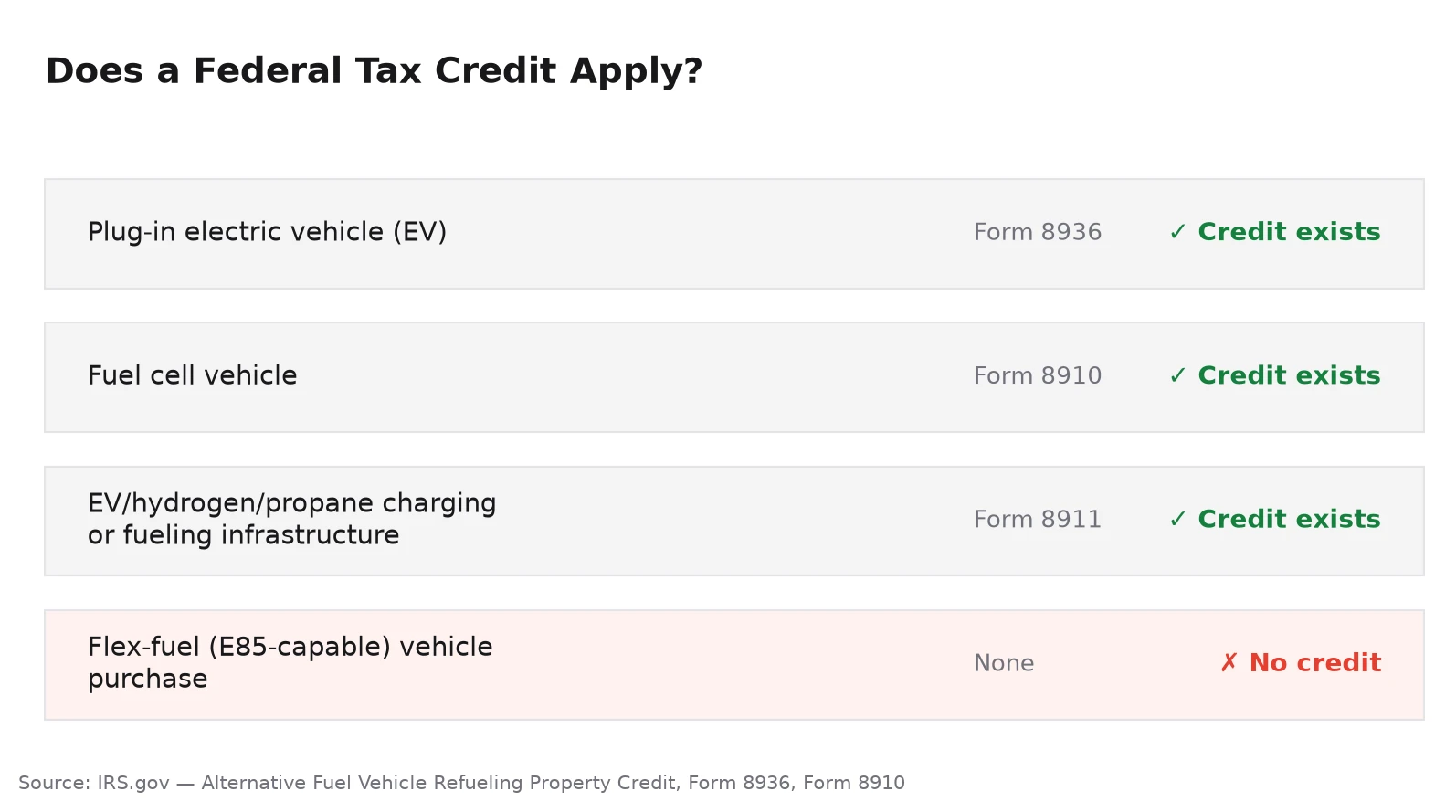
No — a flex-fuel vehicle is not tax efficient in the US, and it is not particularly energy efficient either. There is no federal tax credit for buying or owning a flex-fuel vehicle: the IRS's only flex-fuel-adjacent credit, the Alternative Fuel Vehicle Refueling Property Credit (Form 8911), covers fueling *infrastructure* — EV chargers, hydrogen and propane dispensing equipment — not vehicle purchases, and it does not list E85/ethanol pumps among the eligible property types. On the efficiency side, a flex-fuel vehicle running on E85 gets 15% to 27% fewer miles per gallon than the same vehicle on regular gasoline, because ethanol carries roughly two-thirds the energy density of gasoline per gallon. Even when E85 is priced lower at the pump, the actual cost per mile is often higher.
Is There Any Federal Tax Credit for Flex-Fuel Vehicles?
No. A TurboTax community answer and a direct read of current IRS guidance both confirm this plainly: unlike plug-in electric vehicles (Form 8936) or fuel cell vehicles (Form 8910), flex-fuel/E85-capable vehicles have never had a dedicated federal purchase credit, and none exists for 2026.
The credit people sometimes confuse this with — the Alternative Fuel Vehicle Refueling Property Credit — is real, but it does not apply to the vehicle at all. For property placed in service between January 1, 2023 and June 30, 2026, it covers:
| Claimant | Credit rate | Cap | What it actually covers |
|---|---|---|---|
| Individuals | 30% of installation cost | $1,000 per item | EV chargers, hydrogen refueling, propane dispensing — installed at a primary residence |
| Businesses | 6% base rate (30% if prevailing-wage/apprenticeship requirements are met) | $100,000 per item | Same categories, commercial installation |
Both individual and business claims additionally require the installation to sit inside a qualifying low-income or non-urban census tract. E85/ethanol fueling equipment is not named among the eligible property categories in current IRS guidance.
State-level treatment varies and changes over time — some states have offered flex-fuel-specific incentives in the past (South Carolina is a documented example), but these programs have expiration dates and eligibility rules that shift year to year. Check your state Department of Revenue's current guidance before assuming any state credit applies — do not rely on this article, or any other general article, for your specific state's current rules.
How Much Less Efficient Is E85 Really?
Ethanol contains about two-thirds the energy per gallon that gasoline does (methanol, used in some other flex-fuel contexts, carries roughly half). That translates directly into fewer miles per gallon: independent testing puts the real-world gap at 15% to 27% fewer MPG on E85 compared to the same vehicle running on gasoline, depending on the vehicle and the exact ethanol blend (flex-fuel blends typically run 51%-83% ethanol).
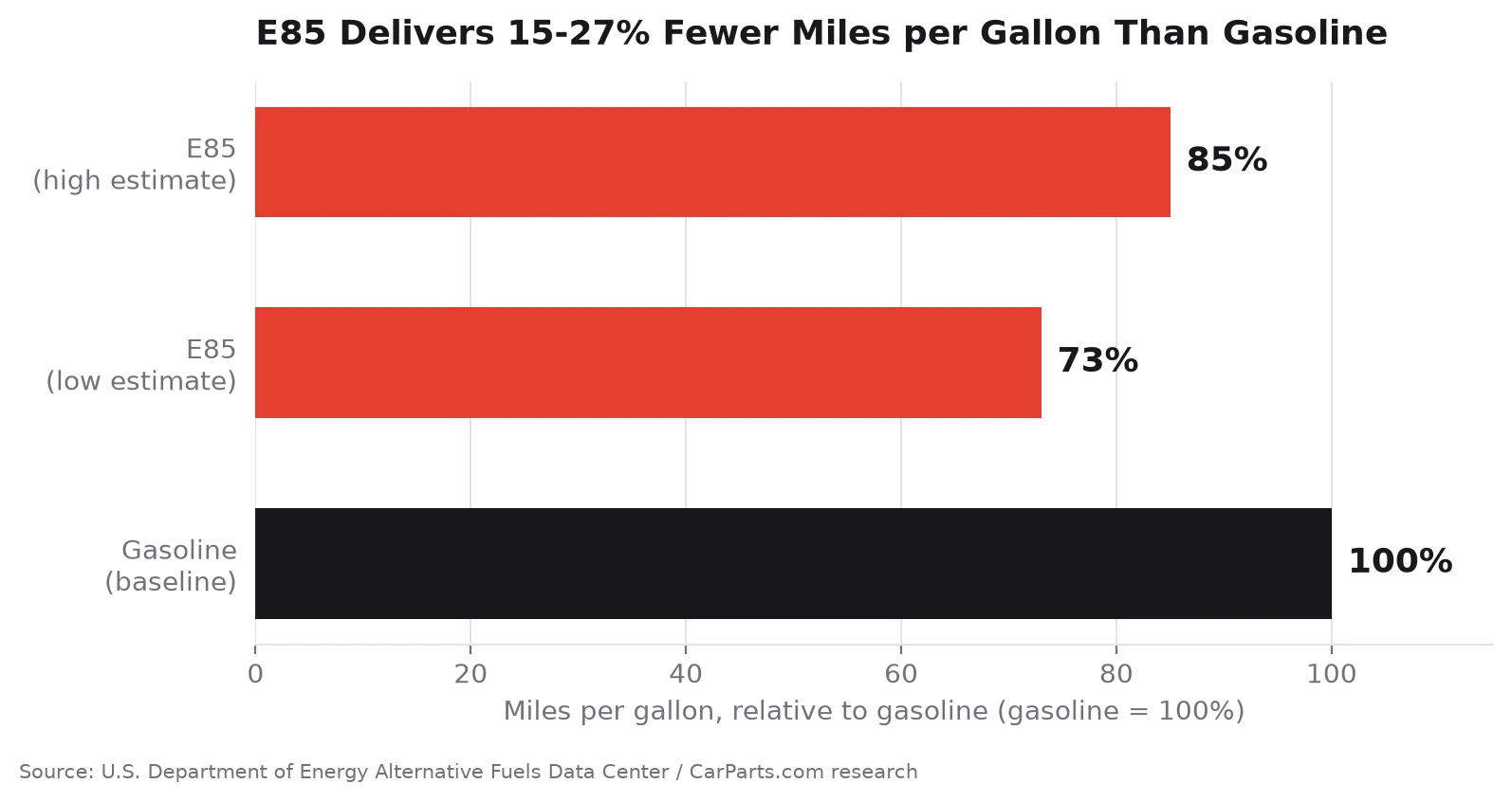
The upside is on emissions, not fuel economy: E85 combustion produces roughly 23% less nitrogen oxide and 30% less carbon monoxide than regular gasoline. That is a genuine environmental benefit — it just is not a tax benefit, and it does not offset the fuel-economy penalty at the pump.
Is Flex-Fuel Worth It at All?
Best for: drivers in regions where E85 is reliably available and priced enough below gasoline (usually 15%+ cheaper per gallon) to offset the MPG penalty, and drivers who specifically want the lower NOx/CO emissions profile regardless of running cost.
Not ideal for: anyone buying a flex-fuel vehicle expecting a tax break — there isn't one at the federal level in 2026 — or anyone assuming E85's lower sticker price per gallon automatically means lower cost per mile. It usually does not.
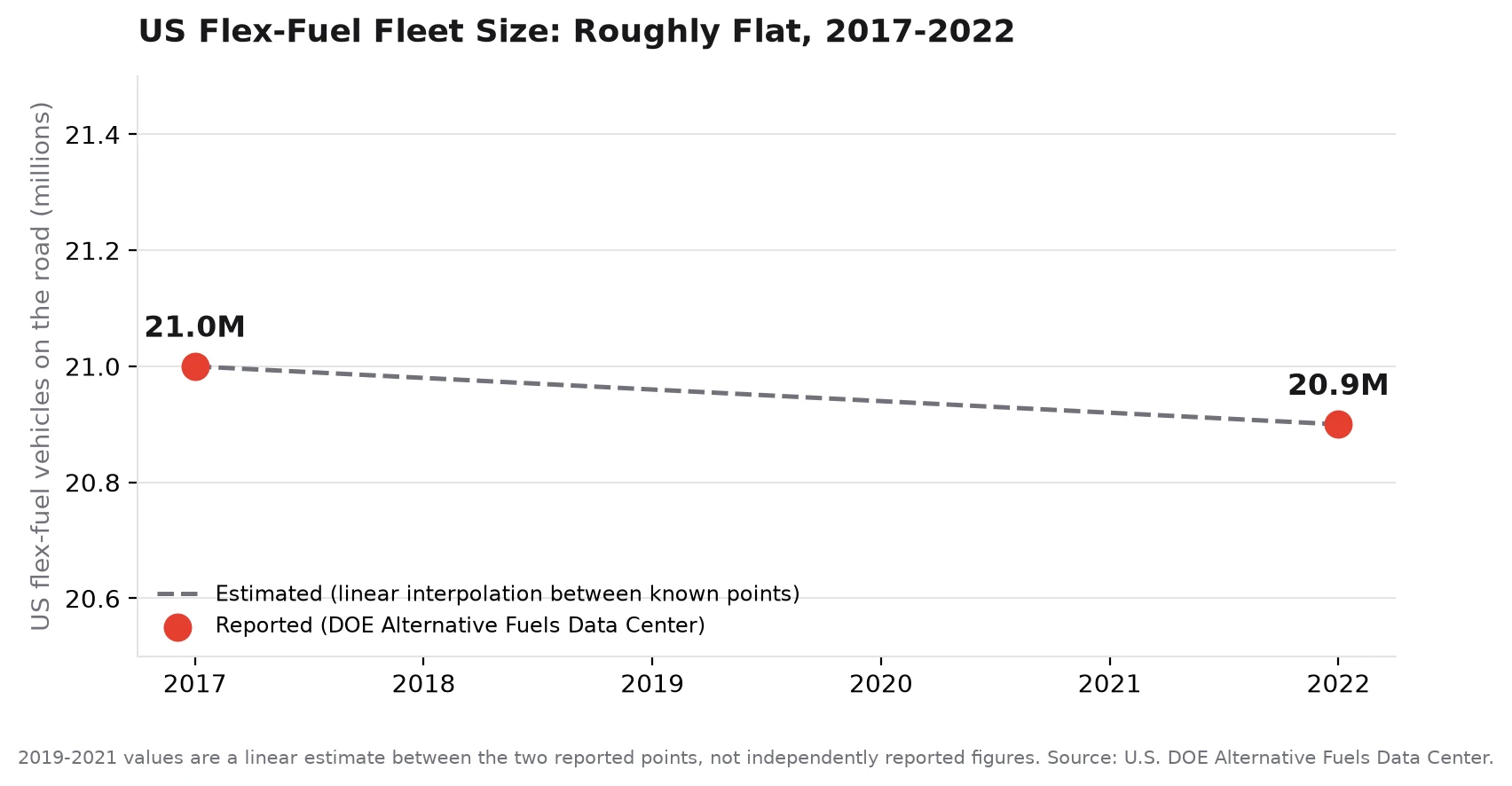
The existing US fleet has held roughly flat, not collapsed: 21 million flex-fuel vehicles in 2017, versus 20.9 million in 2022, per the Department of Energy's Alternative Fuels Data Center. What's actually shrinking is new production, not the installed base — currently only Ford and General Motors produce new flex-fuel models, down from a wider field of automakers a decade ago. Vehicles built before 2008 generally cannot safely run high-ethanol blends at all — check your owner's manual before fueling with anything above E15.

Where Flex-Fuel Actually Matters: Export Markets, Not US Tax Returns
Flex-fuel technology matters more as a market-entry requirement than a US tax strategy. Brazil is the clearest example: it mandates ethanol-compatible (E25) engines for passenger vehicles sold there, independent of any tax-credit question — it's a fuel-market reality (Brazil blends ethanol into its gasoline supply nationwide), not an optional feature. The Geely Coolray in EV Auto Pro's export catalog is built with an E25 flex-fuel-compatible engine specifically to meet this requirement, alongside INMETRO certification for the Brazilian market.

If you're a dealer or importer sourcing flex-fuel-compatible vehicles for Brazil or another ethanol-blend market — rather than a US individual weighing a purchase against your own tax return — that's a question EV Auto Pro can actually help with.
Talk to us: WhatsApp +86 159 6446 7914 or email [email protected].
Sources: IRS: Alternative Fuel Vehicle Refueling Property Credit · TurboTax Community: Is there a tax break for flex fuel vehicles? · CarParts.com: The Pros and Cons of Flexible Fuel Vehicles · U.S. DOE Alternative Fuels Data Center: Flexible Fuel Vehicles
Article FAQ
Common questions
Is there a federal tax credit for buying a flex-fuel vehicle in 2026?
Are flex-fuel vehicles more fuel efficient than gasoline vehicles?
What is the actual benefit of a flex-fuel vehicle, if not tax savings or fuel economy?
Can I put regular gasoline in a flex-fuel vehicle?
Do any states offer a flex-fuel vehicle tax credit even though the federal government does not?
Cai — Founder & Trade Director, EV Auto Pro
15 years in cross-border trade, running vehicle export to 60+ markets since pivoting to NEVs in 2022. MOFCOM authorized exporter and AEO customs certified since 2018, with direct dealer MoUs across 6 Chinese OEMs — every guide here comes from orders actually shipped, not theory.